The Showa Hundred‑Year Problem: Japan’s Y2K‑Like Date‑Handling Conundrum
In 2025 Japan entered the 100th year of the Showa era, raising fears of a “Showa‑Hundred‑Year” glitch analogous to Y2K. The issue stemmed from legacy software that stored Showa years in two digits, potentially misinterpreting 00 as 1925 rather than 2025. Despite extensive pre‑launch testing, the transition passed without incident, illustrating how careful design can prevent era‑based overflow bugs.
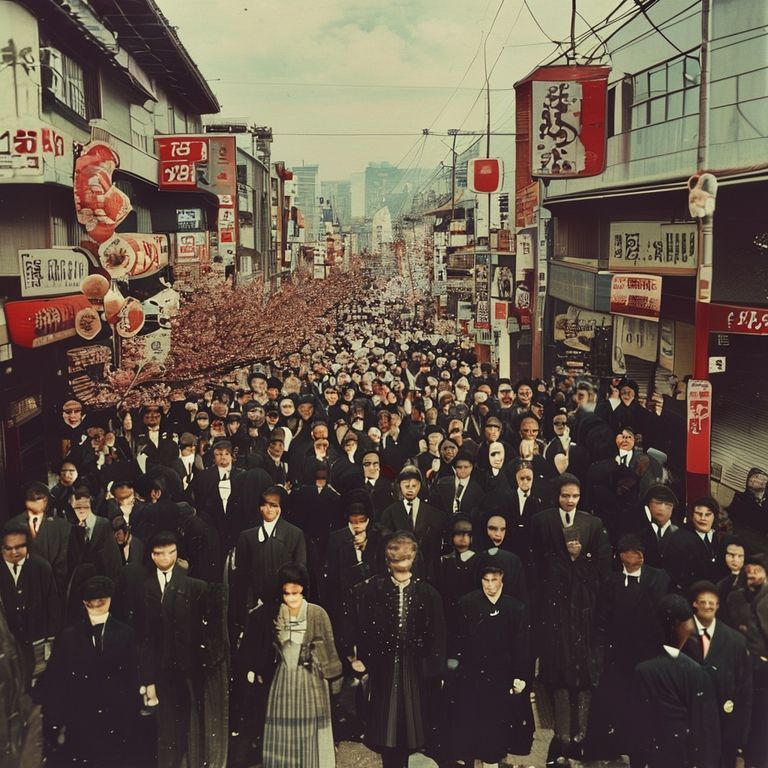
The year 2025 will be remembered not for the anniversary of a popular Taiwanese sarsaparilla or a century‑old Japanese railway kiosk, but for the 100th anniversary of the Showa imperial era. While most of Japan’s public life still relies on the Gregorian calendar, the official dating system—Japan’s imperial era—continues to influence legal documents, taxes, and medical records.
## A Quick Primer on the Imperial Calendar
Unlike the purely numeric Gregorian system, each Japanese year is also identified by the reign of the emperor. The era name changes when a new emperor ascends, and the year count starts at one, not zero. Thus, the year 1926 is Showa 1, but the December 1926 half‑year is still part of Showa 1; the next day in 1927 becomes Showa 2. The 1989 transition illustrates the peculiar overlap: the Gregorian 1989 contains both Showa 64 (until Feb 24) and Heisei 1 (from Feb 25). Since the Meiji restoration in 1868, every emperor has governed a single era, making the historical record more continuous.
## Why 2025 Was a Focal Point
The Showa era spanned 62‑odd years, from 1926 to 1989, covering the formative decades of modern computing. For decades, many corporate and governmental systems embedded Showa years in their legacy databases, often storing the year as a two‑digit number. For those born in the Showa period, “Showa 99” would naturally be the final year of that era. As 2025 approached, developers wondered what would happen when a system that had only seen Showa years stored the number 100; the two‑digit representation would wrap back to 00, interpreted as 1925, a century earlier.
This potential wrap‑around problem is often compared to the Y2K debacle—a failure to correctly handle the transition from 1999 to 2000. However, the Showa anomaly is shifted because the epoch of the era began in 1926, not 1900. Consequently, a two‑digit representation could erroneously point to a year 70 years in the past.
## Mitigations and the Reality in 2025
In the lead‑up to 2025, the community and industry shared guidelines. Many legacy systems were refactored to use four‑digit year fields or to explicitly store the era name along with the year. Code patches were developed that, if a two‑digit value exceeded 64, would subtract 64 and shift the year into the Heisei era. The risk, however, diminished because most critical systems had already migrated to cloud platforms or newer software stacks by 2025.
When midnight fell on January 1, 2025, the digital fabric of Japan was not shaken. No widespread failures or financial disruptions were reported. The pre‑emptive updates and the fact that many “Showa‑only” systems had been retired largely insulated modern infrastructure from the historical glitch.
## A Note on Century Counting and Zero‑Based Years
One nuance that emerged during the review is the absence of a “zero” year in imperial era counting. While the Gregorian calendar’s two‑digit format starts at 00, Japan’s era system starts at 1. A system that mistakenly used a zero‑based counter would misalign by one year, causing a potential overflow at Showa 101 rather than Showa 100. Proper validation checks that the stored value reflects the actual era year remain crucial.
## Conclusion
The Showa Hundred‑Year Problem, once a speculative worry, proved to be a manageable anomaly thanks to proactive software adaptation and a shift of legacy systems to modern architectures. The episode serves as a reminder that cultural and historical contexts can influence technical design, and that vigilance in software maintenance is essential whenever shifting from a long‑standing era‑based calendar to a global, uniformly referenced system.