Trump Administration’s Venezuelan Oil Ambitions: Strategic Reality Check
President Donald Trump has positioned the United States as the vanguard of a Venezuelan oil revival, promising billions of dollars from major oil companies. However, analysts point to a complex mix of sanctions, infrastructure decay, low global oil prices, and political uncertainty that undermine the feasibility of such a bold venture. The outcome will largely depend on how quickly the U.S. can lift sanctions, secure stable governance, and invest in a heavily overtaxed sector.
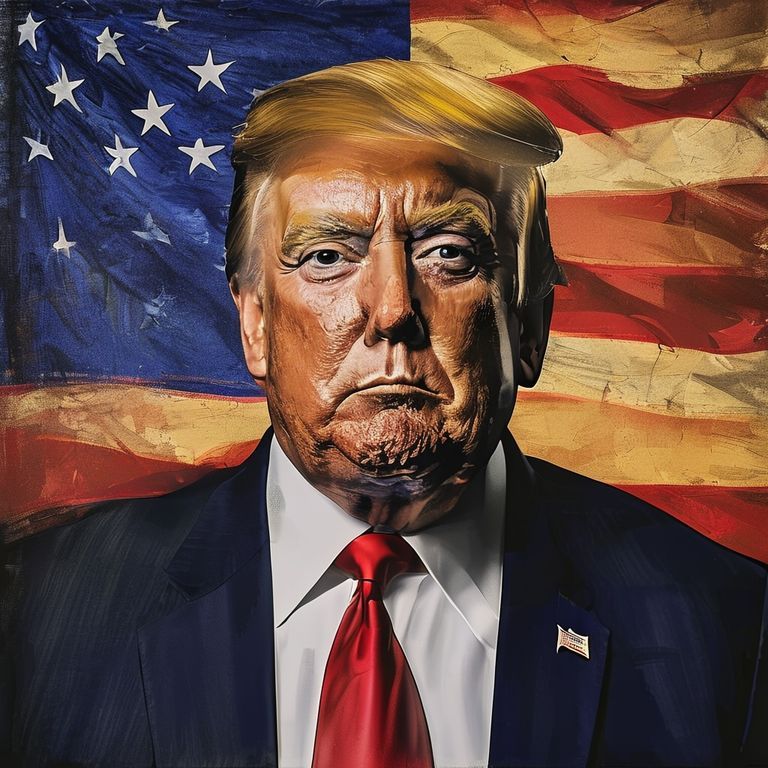
In the weeks following the dramatic capture of Nicolás Maduro, President Donald Trump has publicly reiterated his vision for a revitalised Venezuelan oil sector. At a press conference on Saturday, the president pledged that the United States’ “very large oil companies” would pour billions into repairs of Venezuela’s “badly broken infrastructure.” Trump’s rhetoric echoes his longstanding mantra of “drill, baby, drill,” underscoring an ambition to turn Venezuela’s untapped reserves into a lucrative source of revenue for U.S. industry.
Venezuela sits atop one of the world’s largest oil reserves, yet production has plummeted since the mid‑1990s when President Hugo Chávez nationalised large swaths of the sector. In 2018, the country produced 1.3 million barrels per day, a fraction of the peak of over 3 million barrels in the late‑1990s. The combination of pro‑state control and the sanctions imposed during the first Trump administration have pushed output even lower. The United States, by contrast, produced an average of 21.7 million barrels per day in 2023.
Analysts caution that the administration’s enthusiasm does not fully align with the realities of today’s oil market. Lorne Stockman of Oil Change International notes that “the disconnect between the Trump administration and what’s actually happening in the oil world and what American companies want is huge.” He points to the recent 20‑percent drop in global oil prices in 2025— the steepest decline since 2020— and warns that an oversupplied market could blunt the appetite of U.S. producers for a sudden influx of Venezuelan crude.
The political backdrop adds another layer of complexity. While officials in Washington have targeted Vice President Delcy Rodríguez as a potential successor to Maduro, Rodríguez herself has denied any legitimacy claim, and U.S. Secretary of State Marco Rubio has stated that she is not the “legitimate” president. The lack of a clear and stable leadership structure raises concerns about the long‑term regulatory and investment environment.
From a technical perspective, Venezuela’s reserves are predominantly extra‑heavy, requiring significant processing to meet international specifications. The infrastructure required to extract and transport this oil is in a severe state of decay, and experts estimate that revitalising production could demand tens of millions of dollars and several years of effort. Chevron, the only U.S. company currently operating in Venezuela, may be able to capitalize quickly on any resurgence, while Exxon‑Mobil’s investments in Guyana could benefit from a more stable regional backdrop.
Despite these challenges, the potential economic upside keeps American oil companies on the table. The Gulf of Mexico’s refineries, for instance, have the capacity to absorb new supply and could reap benefits if sanctions were lifted and Venezuelan crude entered the market. However, industry insiders have voiced caution. “The infrastructure is so dilapidated that no one at these companies can adequately assess what is needed to make it operable,” an energy insider told Politico.
Hedge fund officials and asset managers have already begun exploring investment opportunities in Venezuela, a sign that market participants are weighing Trump’s policy as a potential catalyst for change. Nevertheless, the path to a viable, profitable venture hinges on three key factors:
1. **Sanction policy** – The U.S. can either keep sanctions in place, tightening the supply glut, or lift them, opening a vast reservoir to the global market.
2. **Political stability** – Without a recognized and credible government, the long‑term regulatory landscape remains uncertain.
3. **Capital investment** – Reviving Venezuelan production will require substantial upfront capital to rebuild pipelines, refineries, and export infrastructure.
In the broader context of global energy transition, experts like Stockman argue that “oil demand growth is slowing” amid a shift towards renewable energy sources that have become dramatically cheaper over the past decade. Even if Venezuela’s reserves were fully exploited, the return on investment could be marginal given the competitive pressure from cheaper, cleaner alternatives.
The unfolding scenario underscores the tension between a presidential vision driven by fossil‑fuel opportunism and a market environment characterised by volatility, political risk, and the inexorable march toward sustainable energy. Industry observers will be watching closely how the administration navigates these headwinds and whether the promised “oil revolution” translates into tangible profits for U.S. energy companies.