Architecting Adaptive AI Systems: From Orchestration to Reliability
Modern AI deployments hinge on meticulous task decomposition, continuous feedback, and robust memory management. This article walks through the core components—control engines, context handling, self‑healing loops, environment abstraction, human‑centric UX, and rigorous evaluation—that underpin resilient, scalable AI services.
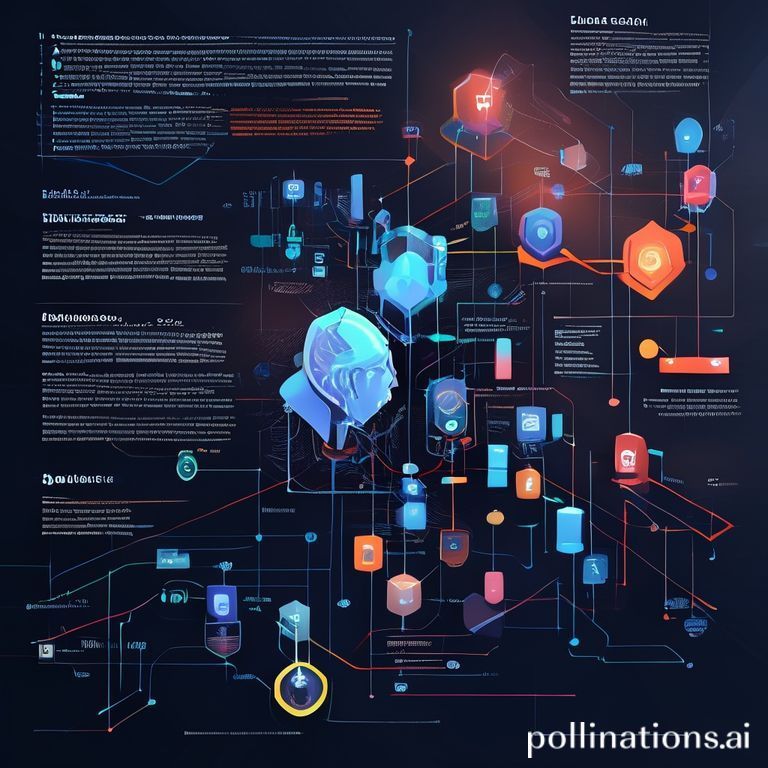
In the age of large‑language models and autonomous agents, the line between a prototype and a production system is defined by the underlying orchestration framework. The framework must translate high‑level goals into concrete, parallelizable sub‑tasks, manage the lifecycle of lightweight sub‑agents, and route specialized tools—such as browsers, databases, or playwright test suites—to the appropriate node.
**Task Decomposition and Sub‑Agent Spawning**
High‑level prompts are broken down into a graph of atomic operations. Each node is instantiated as an isolated sub‑agent, allowing concurrent execution and fine‑grained monitoring. The orchestration engine automatically balances load, retries failed nodes, and consolidates results into a coherent reply.
**Context & Memory Management**
To keep a conversation relevant, the system employs a sliding‑window curation strategy that surfaces the most recent utterances while purging stale data. A hybrid vector cache stores semantic embeddings for rapid similarity searches, and episodic memory modules capture domain‑specific knowledge, making each interaction increasingly personalized.
**Feedback Loops for Self‑Healing**
Robust AI stacks harness a multi‑facetted feedback loop. Compilation checks validate generated code before execution; Continuous‑Integration pipelines rerun the agent logic in a sandbox to catch regressions; human reviewers audit edge cases; and custom retriers automatically re‑issue failed sub‑tasks with adjusted parameters.
**Tool Use & Environment Abstraction**
Agents are granted sandboxed access to a curated toolset—shell commands, browser automation, database connectors, and Playwright scripts. This abstraction layer isolates unsafe operations, enforces rate limits, and provides deterministic execution environments, ensuring both security and reproducibility.
**User Experience & Collaborative Workflows**
Prompt hand‑offs allow domain experts to inject high‑quality directives. Staged commits expose intermediate states of generated code, allowing collaborators to review and merge asynchronously. Background agents run in the background while the primary user interface remains responsive, offering a seamless blend of automation and human oversight.
**Reliability and Evaluation Engineering**
Guardrails—such as content filters, timeout thresholds, and resource quotas—guard against runaway behavior. Evaluation harnesses capture performance metrics, audit trails, and reproducibility checkpoints. Structured logging at every layer enables rapid diagnosis and long‑term analytics.
By weaving together these components, practitioners can deploy AI systems that are not only intelligent but also dependable, secure, and maintainable at scale.