Nvidia CEO Urges AI‑Driven Manufacturing Resurgence in America
At a Center for Strategic and International Studies conversation, Nvidia founder Jensen Huang called on the U.S. to rebuild its manufacturing base by pairing AI infrastructure with a robust energy supply. He warned that without ample, affordable power nations cannot produce the chips and data‑center facilities that fuel the AI revolution, and urged a policy shift that keeps production — and the jobs that come with it — domestic. Huang’s remarks signal a strategic push for a $500 billion AI‑infrastructure build‑out that would position the United States as the world’s leading AI manufacturing hub.
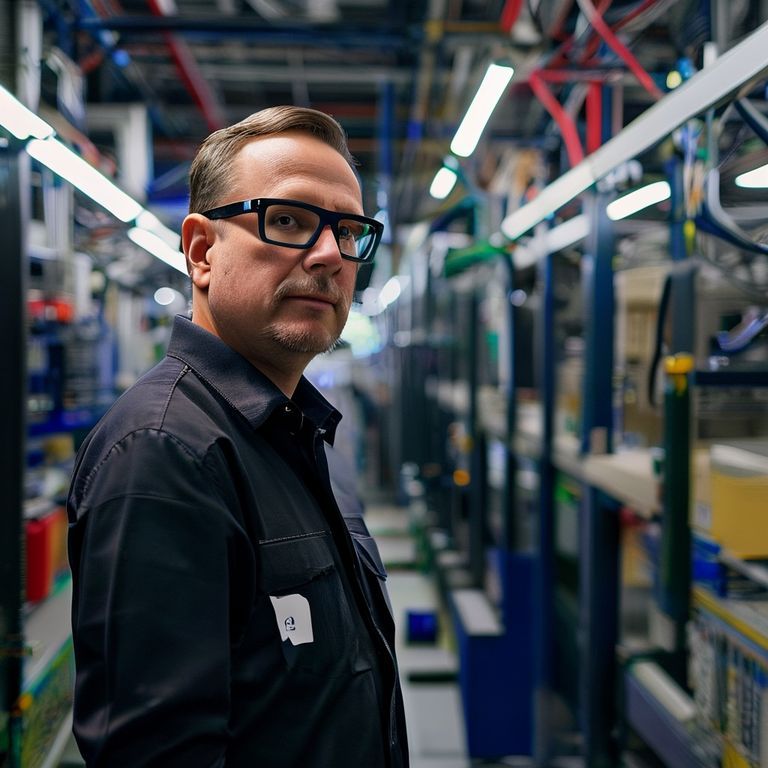
During a fireside chat hosted by the Center for Strategic and International Studies, Nvidia’s founder and chief executive Jensen Huang outlined a bold plan to reclaim U.S. manufacturing by making artificial‑intelligence infrastructure a national priority. Huang argued that the country’s long‑term growth hinges on three interlinked pillars: a dependable, inexpensive energy grid; expanding semiconductor and data‑center capacity; and ensuring that the resulting industrial boom benefits the broad economy rather than only highly‑educated elites.
The CEO’s speech, delivered in the context of recent executive‑level discussions about national AI leadership, directly mirrored remarks he had made to President Donald Trump. Huang identified a “fundamental constraint” that he said has eroded U.S. competitiveness over the past decade: a stalled energy supply that has left new, power‑hungry industries—particularly chip production and large‑scale data centers—unable to thrive.
“Holding back the electricity that powers our factories is essentially holding back the entire economy,” Huang said. He cautioned that building manufacturing hubs ahead of an adequate power grid would sharply increase capital costs and ultimately render the effort unsustainable. In contrast, a simultaneous, aggressive expansion of electricity generation would lower costs and make domestic production more viable.
Extending his argument to social outcomes, Huang emphasized that reviving the manufacturing sector is crucial for inclusive prosperity. He cautioned that America has spent the last twenty years outsourcing manufacturing jobs, leaving large swaths of the workforce behind. “If we truly want social progress, we must create prosperity for all—especially for those who work on the line, not just for PhDs and college graduates,” he said.
To accomplish this, Nvidia has announced a commitment to invest at least $500 billion in AI infrastructure across the United States during the Trump administration’s 2024 term. The company’s plan includes building new semiconductor fabrication plants, expanding data‑center capacity, and partnering with state‑level initiatives to secure the requisite energy supply.
Huang’s perspective draws on his longstanding experience at the intersection of technology and manufacturing. Since founding Nvidia in 1993, he has guided the company from a graphics‑hardware vendor to a key supplier of GPU platforms for data centers, AI training and inference, and high‑performance computing. This evolution has given him inside knowledge of the industrial requirements that underpin digital innovation—particularly the need for reliable power, fabrication infrastructure, and a skilled workforce.
While some critics focus on the environmental impacts of large‑scale energy production, Huang argues that the solution lies in accelerating production across all available sources, including nuclear, natural gas, renewables, and emerging electrolyzer technologies. He contends that a broad‑based, high‑output energy system is required to power the next generation of chips, large‑scale AI models, and autonomous‑vehicle platforms.
Beyond a single administration, Huang’s remarks resonate with a growing consensus that advanced technologies remain limited by the physical infrastructure that supports them. In the AI era, the demand for energy‑intensive facilities—semiconductor fabs, high‑density battery installations, and data‑center colocation—has intensified. Building those facilities domestically, with a forward‑looking supply chain and strong regional energy grids, could position the U.S. to remain at the forefront of AI innovation.
By framing AI as an “industrial revolution” rather than a purely software breakthrough, Huang underscores the linkage between technological change and domestic production capacity. The path forward, he implies, requires a strategic partnership between industry and federal government to build the manufacturing, energy, and workforce foundations necessary for widespread prosperity.
— Caleb Naysmith (No positions in any securities mentioned)