DeepMind Partners with Boston Dynamics to Empower Humanoid Robots with Gemini AI
Google DeepMind and Boston Dynamics have joined forces to integrate DeepMind’s Gemini robotics model into Boston Dynamics’ Atlas and Spot robots, marking a significant step toward autonomous, context-aware manufacturing work. The collaboration will see Gemini‑powered Atlas robots tested in Hyundai factories, while the combined expertise promises faster task mastery and safer human‑robot interaction.
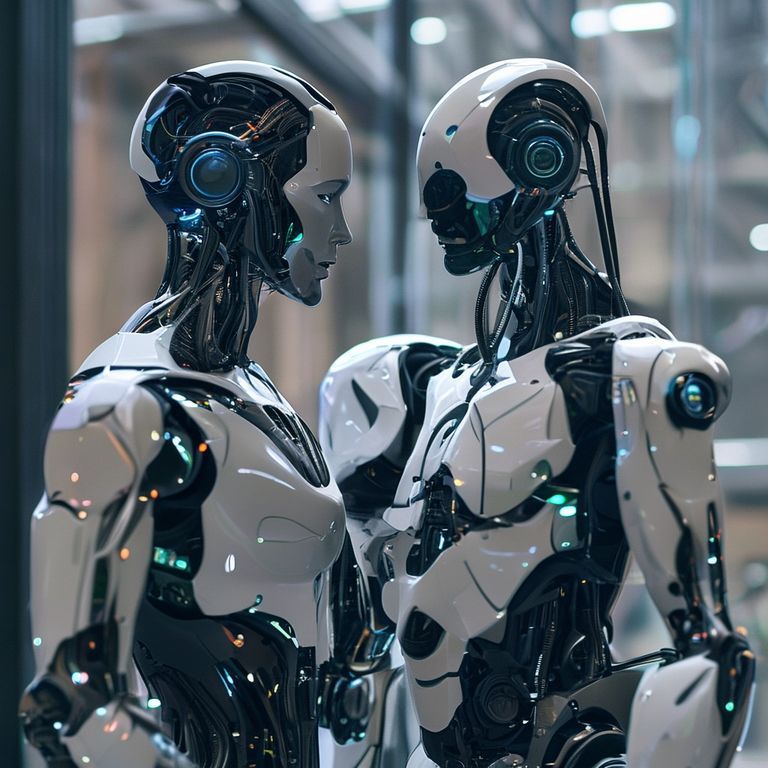
In a landmark announcement at CES in Las Vegas, Google DeepMind revealed a partnership with Boston Dynamics to equip the latter’s humanoid platforms—Atlas and the quadrupedal Spot—with advanced artificial intelligence powered by DeepMind’s Gemini robotics model. The initiative aims to give robots the situational awareness and dexterity needed to navigate unfamiliar environments, recognize objects, and manipulate them with human‑like precision, tackling the core challenges that have limited practical deployment of humanoids.
Atlas, Boston Dynamics’ flagship humanoid, has long impressed with its agility and acrobatic capabilities, yet it has been hampered by a lack of sophisticated perception and decision‑making. Gemini promises to fill that gap by providing multimodal reasoning that processes visual, tactile, and sensor data in real time. CEO Robert Playter emphasized that "the real value goes forward is for our robots to be contextually aware of their environment and able to use their hands to manipulate any object," with manufacturing sites—starting with Hyundai factories where Boston Dynamics holds a controlling stake—identified as ideal testbeds.
DeepMind’s CEO Demis Hassabis has positioned Gemini as a universal engine, analogous to Android’s role with smartphones. By licensing the model to diverse robot makers, DeepMind anticipates a broad ecosystem in which robots of varying form factors can rapidly acquire new skills. Carolina Parada, Senior Director of Robotics at DeepMind, highlighted Gemini’s multimodal architecture as essential for bridging the gap between computational models and the physical world.
The collaboration also acknowledges the safety imperatives inherent in giving robots greater autonomy. Parada noted that Gemini incorporates advanced reasoning layers designed to anticipate and mitigate hazardous behavior, supplementing Boston Dynamics’ robust physical safety features. Playter added that ensuring human safety, even for smaller robots, will be paramount as the technology scales.
Boston Dynamics’ journey—from its 2013 association with Google to its 2017 acquisition by SoftBank and the 2021 Hyundai stake—has been driven by breakthroughs in actuators, batteries, and sensors. Coupled with the growing interest from AI companies such as OpenAI, Tesla, and several startups, the DeepMind partnership signals a decisive move toward creating truly general‑purpose robots. The forthcoming trials in Hyundai’s automotive plants will provide critical data, accelerating the refinement of both Gemini’s physical reasoning and the robots’ mechanical capabilities.
Looking ahead, the partnership envisions a future where humanoid and other robotic platforms can be rapidly deployed across a spectrum of industries—from manufacturing to logistics, and potentially to domestic assistance—once their AI is robust enough to master complex, unstructured tasks with minimal supervision.