Cerelog ESP‑EEG: A Research‑Grade 8‑Channel Biosensing Board with Closed‑Loop Noise Suppression
Cerelog’s ESP‑EEG delivers research‑class 8‑channel biosensing for EEG, EMG, ECG, and BCI applications, powered by a Texas Instruments ADS1299 and an ESP32‑WROOM‑DA module. The firmware is open‑source and fully compatible with Lab Streaming Layer and Brainflow, while its closed‑loop active bias circuitry provides superior noise rejection in non‑shielded environments. The board is portable, Wi‑Fi ready, and safe to use only with battery‑powered computers, as detailed in its extensive documentation and Discord community support.
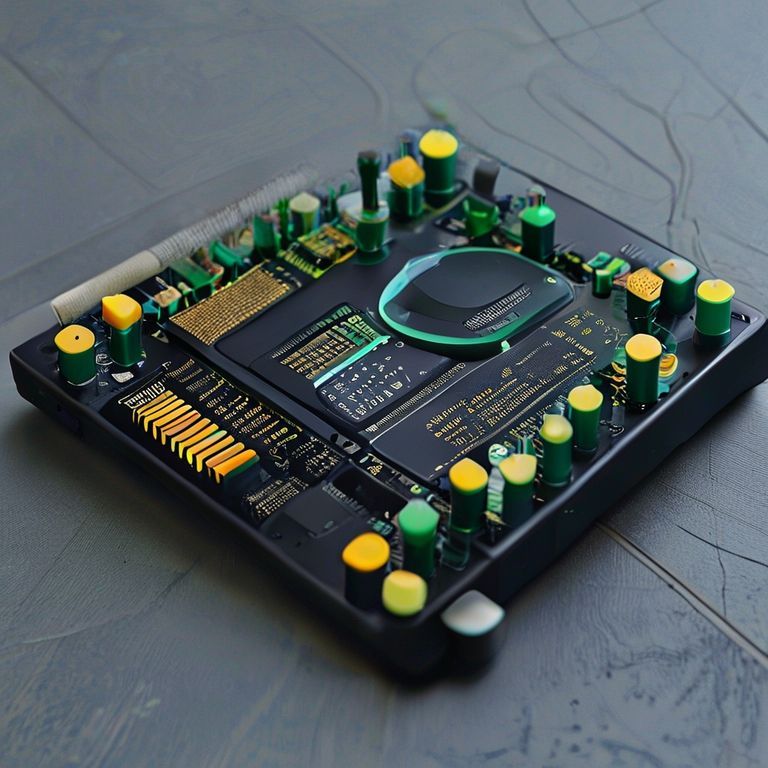
Cerelog’s ESP‑EEG is a compact, research‑grade biosensing platform that offers eight differential analog‑to‑digital conversion channels and a dedicated active‑bias channel, all driven by a Texas Instruments ADS1299 24‑bit ADC. Designed to accommodate EEG, EMG, ECG, and brain‑computer‑interface (BCI) experiments, the board is integrated with an ESP32‑WROOM‑DA microcontroller that supplies Wi‑Fi, Bluetooth, and USB‑C connectivity.
## Key Features
- **Open‑Source Firmware & Schematic** – The full firmware, source code, and schematics are openly available, enabling developers to customize data acquisition, channel configuration, and driver logic.
- **Lab Streaming Layer (LSL) Compatibility** – Through a Python client, the ESP‑EEG streams raw samples via the LSL protocol, allowing seamless integration with OpenBCI‑Gui (a custom fork), MATLAB, Python, and other neuroscience software. A dedicated LSL‑Python wrapper is provided for quick setup.
- **Brainflow API Support** – Users can connect the board to the Brainflow framework for real‑time signal processing, feature extraction, and machine‑learning pipelines. Sample scripts and a custom repository instance are supplied in the project.
- **Closed‑Loop Active Bias** – Unlike many consumer EEG devices that rely on open‑loop biasing, the ESP‑EEG implements a true closed‑loop scheme: the ADS1299 measures the common‑mode voltage, inverts it, and actively drives it back into the body via the Drive‑Right‑Leg pin. This results in a markedly lower noise floor and reduced 50/60 Hz interference.
- **Wi‑Fi (Beta) and Bluetooth** – The ESP32 core provides wireless data streaming, enabling mobile data capture without USB tethering.
- **Battery‑Powered, Non‑Isolated Design** – The board accepts a 3.7 V Li‑Po pack through a JST‑PH 2.0 mm connector and is explicitly designed for battery‑only operation to eliminate grounding loops and electrical shock risk.
## Hardware Overview
| Item | Description |
|------|-------------|
| **ADC** | Texas Instruments ADS1299, 24‑bit, research‑grade resolution |
| **Channels** | 8 differential biosensing channels + 1 active‑bias channel |
| **Sample Rate** | Default 250 samples per second (configurable) |
| **Processor** | ESP32‑WROOM‑DA, dual‑core, Wi‑Fi/BT capable |
| **Connectivity** | USB‑C for data and power, Wi‑Fi, Bluetooth 4.2 |
| **Montage** | Default referential (SRB1 = reference), configurable to sequential or other arrangements |
| **Indicators** | Status LED (GPIO17) – solid green when firmware succeeds; battery LEDs – red while charging, green when fully charged |
| **Connectivity** | JST‑PH 2 mm battery connector (red = +, black = –) |
The printed circuit board exposes standard touch‑proof header pins for electrodes: signals on pins 1‑8 and a dedicated reference on SRB1.
## Safety and Compliance
The ESP‑EEG is a non‑isolated research tool and **must** be used only with laptop or Raspberry Pi systems that run on battery power. Connecting the board to a mains‑powered PC or any other powered device exposes users to shock risk and introduces significant ground‑loop noise that can degrade the signal quality.
> **Critical Safety Warning** – This device is *not* a medical device, has not completed regulatory testing (FDA, UL, or FCC), and is intended solely for engineering, research, and educational use. The manufacturer disclaims all liability for indirect, incidental, or consequential damages arising from its use.
## Getting Started
1. **Acquire the Board** – Purchase or request a development kit from Cerelog’s website (https://cerelog.com/esp-eeg).
2. **Install Firmware** – Clone the Git repository, flash the ESP32 with the provided firmware, and verify the boot status via the status LED.
3. **Configure Channels** – Use the included firmware folder to set channel mappings, calibration parameters, and montage options.
4. **Connect to LSL** – Launch the bundled Python LSL client or import the provided script into your own environment. OpenBCI‑Gui (the custom fork) will automatically detect the stream.
5. **Optional Brainflow Integration** – Import the provided Brainflow custom repository into your Python environment and follow the README to start collecting data streams.
6. **Start Experiments** – Attach the electrodes, monitor the real‑time plot in LSL or Brainflow, and record sessions.
## Community Support
- **Discord Chat Community** – Join Cerelog’s Discord server for quick troubleshooting, firmware tips, and discussion of experimental setups.
- **Documentation** – Full usage guides, schematics, and setup scripts are hosted in the product’s GitHub repository.
- **Video Overview** – A short product overview video is available through the product page, showcasing hardware setup, data streaming, and noise‑reduction demonstrations.
## Conclusion
The Cerelog ESP‑EEG delivers a low‑cost yet research‑grade platform for high‑fidelity biosensing. Its closed‑loop active bias architecture, open‑source software stack, and versatile connectivity options empower laboratories and practitioners to conduct precise EEG, EMG, ECG, and BCI research in a portable format. By adhering to the stringent safety guidelines outlined above, users can safely leverage the board’s capabilities for cutting‑edge neurophysiological investigations.