US Alleged Operation to Capture Venezuelan President Maduro Raises Sovereignty, Security, and Regional Strategy Questions
The U.S. administration has announced a purported operation that resulted in the capture of Nicolás Maduro, citing a need to restore ‘good governance’ in Venezuela. Trump’s claims include plans to rebuild Venezuela’s oil infrastructure, administer a military transition, and repurpose U.S. strategic doctrine. Analysts warn of escalating tensions across Latin America as the U.S. signals a re‑engagement with its traditional hemispheric influence.
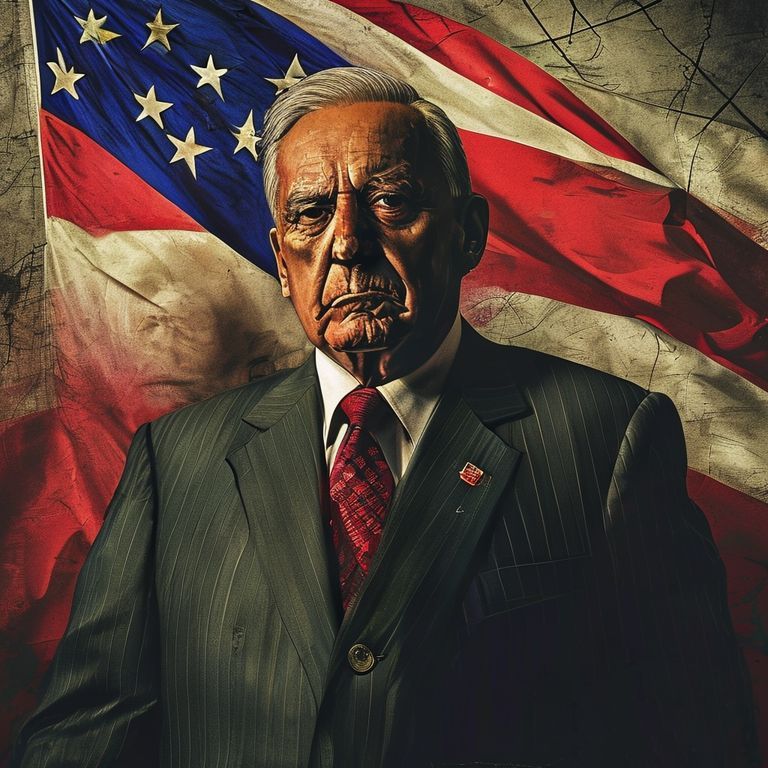
US Claims Completion of Operation Targeting Nicolás Maduro
During a press briefing at the Mar‑a‑Lago compound, President Donald Trump announced that U.S. forces had carried out an operation culminating in the seizure of Venezuelan leader Nicolás Maduro. Trump’s statements, made shortly after an unnamed ‘offensive against military targets,’ asserted that U.S. officials would assume executive control until a “safe, proper and judicious transition” could be effected. The Secretary of State, Marco Rubio, and Secretary of Defense, Pete Hegseth, were cited as being positioned to assume leadership roles.
Trump emphasized that “someone that does not have the good of the Venezuelan people in mind” should not govern, citing historical concerns about the Venezuelan political system. The president also highlighted the removal of Maduro and his spouse from Venezuelan jurisdiction, asserting that they would face U.S. legal proceedings on allegations of drug trafficking and corruption.
Opposition Claims and Constitutional Challenges
Within hours of the announcement, María Corina Machado—an opposition leader and Nobel Peace Prize laureate—issued a statement calling for Edmundo González Urrutia to immediately assume the presidency in accordance with the 2024 election results. González Urrutia’s own tweet echoed Machado’s call, urging Venezuelan citizens to support the transition and citing a “great operation of reconstruction” for the nation. This stance directly contrasts with Trump’s proposal of a U.S.–led transition, raising questions about the legitimacy and viability of either plan.
Oil Infrastructure and Economic Implications
Trump articulated a plan to invest heavily in Venezuela’s oil sector, citing a 2007 expropriation wave that had “stolen” U.S. oil assets. He pledged substantial American corporate capital to repair damaged infrastructure, claiming the United States would “make money for the country.” This narrative references the country’s vast crude reserves—estimated at over 300 billion barrels, largely in offshore or deep‑water fields—and its current output of roughly 1 million barrels per day, far below the 3.5 million barrels it produced in the late 1990s.
Notably, the U.S. has long maintained a policy of non‑intervention in sovereign affairs; the claim that America will administer Venezuela’s resources and governance remains unverified in international law. Analysts warn that such ambitions could strain diplomatic relations and provoke legal challenges in international courts.
Operation “Absolute Resolve” and Military Readiness
Dan Caine, a senior military official, described the operation as “Operation Absolute Resolve,” involving more than 150 aircraft launched from 20 bases across the U.S. He characterized the mission as “discreet, precise, and conducted during the darkest hours of January 2.” Trump stated that while the first attack was successful, the U.S. was prepared for a secondary operation, hinting at a broader military strategy in the region.
“Donroe Doctrine” and Strategic Realignment
Trump’s remarks tie into a broader framework he referred to as the “Donroe Doctrine,” a reinterpretation of the historic Monroe Doctrine. The 2025 National Security Strategy document emphasizes maintaining U.S. preeminence in the Western Hemisphere and countering competing powers like China and Russia. Key objectives include strengthening ties with regional allies, enhancing control over maritime routes, and deploying U.S. Coast Guard and Navy assets to secure borders and curtail drug trafficking.
Venezuela is portrayed by U.S. officials as a laboratory for this renewed strategy, aimed at limiting illegal migration, neutralizing cartels, and securing strategic assets. Critics, such as journalist Luz Mely Reyes, argue that the strategy leverages economic control rather than genuine security concerns.
Repercussions for Regional Stakeholders
The announcement has intensified scrutiny over potential U.S. actions against other Latin American countries. Trump made comments suggesting that Mexico’s political environment requires intervention to reduce cartel influence, and he warned Colombian leader Gustavo Petro about drug flows into the United States. While denied as specific directives towards Mexico, these remarks signal heightened U.S. vigilance in the hemisphere.
The broader implication is a possible expansion of the “Donroe Doctrine” beyond Venezuela, potentially affecting Mexico, Colombia, Brazil, and other nations. Analysts underscore the risk of diplomatic friction, unintended military confrontations, and the erosion of regional autonomy if U.S. intervention becomes more overt.
Conclusion
The U.S. administration’s claims regarding the capture of Nicolás Maduro and its proposed role in Venezuela’s future governance represent a bold deviation from established U.S. foreign policy norms. The veracity of these claims remains contested, and the potential legal, diplomatic, and military ramifications are significant. As the situation develops, observers will monitor how the U.S. balances its strategic objectives with respect for international sovereignty and regional stability.